• Who We Are
    • Natural Systems Utilities
    • About NSU
      • Our Story
      • Our Team
      • Our Partners
      • Our Careers
      • Bennett Environmental Associates
      • News
    • Our Projects
      • Battery Park
      • Domino Sugar Redevelopment
      • Gillette Stadium & Patriot Place
      • View All Projects
  • What We Do
    • Services
      • Design-Build
      • Design-Build-Operate
      • Operate
      • Maintenance
      • Ownership
      • Our Projects
    • Solutions
      • Environmental Consulting
      • Operations
      • Wastewater
      • Water Reuse
      • Water Supply
    • Sectors
      • Residential, Commercial, Mixed Use
      • Sporting Complex
      • Higher Education
      • Tech Campuses
      • Food & Beverage
      • Data Centers
      • Hospitals & Health Care
      • Hotels & Resorts
      • Municipal Government
  • Contact Us
  • Menu Menu

Natural Systems Utilities News

Design-Build-Operate: The Advantages of a Single-Source Water Infrastructure Partner

June 9, 2026/in Blog, News

Developing a successful water treatment project requires careful coordination across engineering, permitting, construction, operations, and maintenance.

When multiple vendors are involved, communication gaps and accountability issues can lead to delays and increased costs.

A Design-Build-Operate (DBO) approach helps solve these challenges.

What Is Design-Build-Operate?

Under a DBO model, a single partner oversees the entire project lifecycle, including:

  • Planning and engineering
  • Permitting support
  • Construction
  • System startup
  • Ongoing operations
  • Maintenance and compliance

Benefits of a DBO Approach

Streamlined Project Delivery

Having one team responsible for every phase improves coordination and accelerates decision-making.

Reduced Risk

A single-source provider maintains accountability throughout the project, minimizing conflicts between designers, contractors, and operators.

Better Long-Term Performance

Systems are designed with operational efficiency and maintenance requirements in mind from the beginning.

Regulatory Confidence

Experienced operators understand compliance requirements and can help facilities maintain performance standards throughout the life of the system.

Looking Beyond Construction

A water treatment project does not end when construction is complete. Long-term success depends on effective operation, maintenance, and adaptation to changing conditions.

By partnering with an experienced Design-Build-Operate provider, organizations can achieve greater reliability, sustainability, and return on investment while focusing on their core business objectives.

https://nsuwater.com/wp-content/uploads/2024/10/NSU-Projects.jpg 502 705 Matthew McPherson https://nsuwater.com/wp-content/uploads/2024/02/New-NSU-logo.svg Matthew McPherson2026-06-09 11:30:002026-06-12 11:37:19Design-Build-Operate: The Advantages of a Single-Source Water Infrastructure Partner

Why Hospitals Should Prioritize Sustainable Water Infrastructure

May 12, 2026/in Blog, News

Hospitals operate around the clock and rely on water for countless essential functions, including sanitation, patient care, laundry services, cooling systems, and facility maintenance.

Because healthcare facilities are among the highest water users per square foot, water management deserves a strategic focus.

The Challenge

Healthcare facilities face growing pressure to:

  • Reduce operating expenses
  • Meet sustainability goals
  • Ensure uninterrupted service
  • Maintain regulatory compliance

At the same time, aging infrastructure and water supply concerns create new risks.

Opportunities Through Water Reuse

Modern water treatment technologies make it possible to recycle water for numerous non-potable applications, including:

  • Toilet flushing
  • Landscape irrigation
  • Cooling tower operations
  • Mechanical system support

These solutions help reduce overall water demand while preserving critical resources.

Improving Resilience

Healthcare facilities must remain operational during emergencies. On-site treatment and reuse systems can provide an additional layer of resilience by reducing dependence on external infrastructure.

A Smarter Approach to Resource Management

Investing in sustainable water infrastructure not only supports environmental objectives but also helps healthcare organizations manage costs and improve long-term operational reliability.

As healthcare leaders evaluate future capital investments, water management should remain a key component of facility planning.

https://nsuwater.com/wp-content/uploads/2024/10/NSU-Projects.jpg 502 705 Matthew McPherson https://nsuwater.com/wp-content/uploads/2024/02/New-NSU-logo.svg Matthew McPherson2026-05-12 11:29:032026-06-12 11:36:42Why Hospitals Should Prioritize Sustainable Water Infrastructure

How Data Centers Can Address Water Challenges Through On-Site Recycling

April 1, 2026/in Blog, News

Data centers power the digital economy, but they also require significant water resources for cooling and facility operations.

As demand for cloud services and artificial intelligence infrastructure grows, operators are under increasing pressure to reduce water consumption while maintaining reliability.

Why Water Matters for Data Centers

Cooling systems are among the largest consumers of water within many facilities. In regions experiencing drought conditions or water restrictions, securing reliable water supplies can become a major operational challenge.

The Role of On-Site Water Recycling

On-site water treatment and recycling systems allow facilities to reclaim wastewater and repurpose it for cooling and other non-potable applications.

Potential benefits include:

  • Reduced dependence on municipal water supplies
  • Lower utility costs
  • Improved sustainability metrics
  • Increased operational resilience
  • Enhanced regulatory compliance

Supporting Corporate Sustainability Goals

Many technology companies have established ambitious environmental commitments, including water stewardship objectives.

Implementing water reuse infrastructure helps organizations move closer to achieving these goals while demonstrating leadership in responsible resource management.

Building a Sustainable Future

As the data center industry continues to expand, innovative water solutions will play a critical role in balancing operational growth with environmental responsibility.

Organizations that proactively invest in water recycling today will be better positioned to meet tomorrow’s resource challenges.

https://nsuwater.com/wp-content/uploads/2024/10/NSU-Projects.jpg 502 705 Matthew McPherson https://nsuwater.com/wp-content/uploads/2024/02/New-NSU-logo.svg Matthew McPherson2026-04-01 11:28:102026-06-12 11:36:21How Data Centers Can Address Water Challenges Through On-Site Recycling

Five Ways Water Reuse Can Reduce Operating Costs for Commercial Facilities

February 26, 2026/in Blog, News

For commercial property owners and facility managers, water costs are no longer a minor line item. Rising utility rates and increasing sustainability expectations are prompting organizations to seek smarter ways to manage water resources.

Water reuse offers a practical solution that can generate significant operational savings.

1. Reduce Potable Water Consumption

Many commercial facilities use drinking-quality water for applications that do not require it, such as irrigation, cooling towers, and toilet flushing.

By treating and reusing wastewater on-site, facilities can dramatically reduce potable water demand.

2. Lower Sewer and Discharge Fees

Many municipalities assess wastewater charges based on water consumption. Reusing water on-site reduces discharge volumes, which can help lower sewer-related costs.

3. Protect Against Utility Rate Increases

Water and wastewater rates continue to rise in many regions. A water reuse system provides greater control over operating expenses and reduces exposure to future rate increases.

4. Improve Sustainability Performance

Many organizations now report environmental performance metrics to investors, customers, and stakeholders. Water reuse programs help demonstrate measurable progress toward sustainability goals.

5. Increase Property Value

Properties equipped with sustainable infrastructure often attract environmentally conscious tenants, investors, and development partners.

Water Reuse as a Strategic Investment

While every facility has unique requirements, water reuse systems frequently deliver long-term financial and environmental benefits. Organizations that invest in water recycling today are positioning themselves for greater resilience and operational efficiency in the future.

https://nsuwater.com/wp-content/uploads/2024/10/NSU-Projects.jpg 502 705 Matthew McPherson https://nsuwater.com/wp-content/uploads/2024/02/New-NSU-logo.svg Matthew McPherson2026-02-26 11:27:052026-06-12 11:35:43Five Ways Water Reuse Can Reduce Operating Costs for Commercial Facilities

The Future of Water Management: Why Decentralized Systems Are Gaining Momentum

January 12, 2026/in Blog, News

Water infrastructure across North America is under increasing pressure. Aging municipal systems, population growth, climate variability, and rising utility costs are forcing communities and businesses to rethink how water is sourced, treated, and reused.

One solution rapidly gaining momentum is decentralized water management.

Unlike traditional centralized systems that rely on large-scale treatment facilities and extensive distribution networks, decentralized systems treat and manage water closer to where it is used. This approach provides greater flexibility, resilience, and sustainability for residential developments, commercial campuses, healthcare facilities, universities, and municipalities.

What Is Decentralized Water Management?

A decentralized water system treats wastewater, recycled water, stormwater, or potable water at or near the point of use. Instead of transporting water long distances through aging infrastructure, treatment occurs locally, reducing strain on public utilities and improving resource efficiency.

These systems can be designed to serve:

  • Mixed-use developments
  • Corporate campuses
  • Hotels and resorts
  • Hospitals
  • Educational institutions
  • Municipal communities
  • Industrial facilities

Key Benefits

Enhanced Water Security

Communities facing droughts or water supply limitations can reduce dependence on external sources by implementing local treatment and reuse systems.

Lower Infrastructure Costs

Extending centralized water and sewer services to new developments can be expensive. Decentralized systems often provide a cost-effective alternative.

Sustainability Improvements

Water reuse allows organizations to maximize every gallon by recycling treated wastewater for irrigation, cooling systems, toilet flushing, and other non-potable applications.

Greater Resilience

Local treatment capabilities help facilities maintain operations during utility disruptions, emergencies, or infrastructure failures.

Planning for Long-Term Success

The most successful decentralized systems are designed with long-term operations, maintenance, and regulatory compliance in mind. Working with an experienced partner from planning through operation ensures optimal performance and reliability.

As water challenges continue to evolve, decentralized water infrastructure is becoming a critical component of sustainable development and environmental stewardship.

https://nsuwater.com/wp-content/uploads/2024/10/NSU-Projects.jpg 502 705 Matthew McPherson https://nsuwater.com/wp-content/uploads/2024/02/New-NSU-logo.svg Matthew McPherson2026-01-12 11:24:122026-06-12 11:32:22The Future of Water Management: Why Decentralized Systems Are Gaining Momentum

Potable Water Reuse Report

December 7, 2025/in News

Source: https://rewater.usc.edu/potable-water-reuse-report-ows/

Published by the University of Southern California ReWater Center in collaboration with Trussell

Special Issue

24 November 2025

Onsite Water Systems: An Expanding Reuse Paradigm

Key Takeaways:

  • The growth of onsite water reuse (OWR) is clear: 19 US states have regulations or guidelines that allow the practice
  • An onsite water system is a decentralized system that collects, treats, and reuses water at the property where it is generated, rather than sending it to a centralized facility
  • Stakeholders interviewed for this issue view OWR as an additional tool to support reuse and conservation goals
  • Drivers for OWR include: (1) water scarcity, (2) lack of centralized wastewater capacity, and (3) economic advantages
  • Key challenges for implementation include: (1) cost, (2) lack of public health requirements and program organization, and (3) stepping out of the “municipal mindset”
  • Top solutions to address challenges: (1) legislation and regulations, (2) mandates and incentives, and (3) experience
  • The rapid development of OWR across the US shows that the practice is moving into the mainstream

Introduction

Previous issues of the Potable Water Reuse Report have focused on municipal-scale systems, but onsite water reuse (OWR) is emerging as an important new tool in the water resources toolbox. The goals of this issue are to (1) introduce readers to the practice of OWR, (2) describe the growth of OWR in the US, and (3) explain the key drivers, challenges, and solutions for more widespread and safe implementation. While the specific topic of this issue is OWR, the lessons learned from this emerging field are relevant for the pursuit of any new water paradigm—centralized or decentralized, potable or non-potable.

1) What is an Onsite Water System?

An onsite water system is a decentralized system that collects, treats, and reuses water at or near the property where it is generated, rather than sending it to a centralized facility. Two key differentiators with centralized reuse are (1) the fact that onsite water systems are often private (rather than municipal) systems and (2) they are smaller in scale. At its smallest scale, OWR could be a single appliance, such as a recirculating shower or washing machine. The reuse of graywater at a single-family home for irrigation is also considered OWR. To date, the most common implementation of OWR is at building scale, such as a system that collects wastewater from a multi-story commercial building to be treated and reused for toilet flushing and irrigation. At its largest form, multi-building district-scale OWR may collect and reuse 400,000 gpd or more of water for multiple end uses.

Perhaps the most unique aspect of OWR (versus centralized water reuse) is the multiple combinations of source waters (i.e., where the water is coming from) and end uses (i.e., where the water goes after treatment). Source waters span a range of qualities from relatively clean roof runoff to onsite wastewaters (typically blends of both blackwater from toilets and kitchen sinks and graywater from bathroom sinks, showers, washing machines, etc.). Onsite wastewaters may be of higher strength than municipal-scale sewage. End uses have primarily focused on non-potable applications (e.g., toilet flushing, irrigation), though there is growing interest in “near-potable” applications (e.g., showering) and even potable reuse. Figure 1 shows the different scales of OWR as well as the source waters and end uses typically associated with each scale. Generally, larger scales of OWR allow a greater diversity of source waters and end uses.

OWR is not restricted to civilian applications but is also used in military operations. For example, forward operating bases may use an onsite water system that collects graywater and reuses it for toilet flushing, clothes washing, and showering. Stateside field training bases have also benefited from various types of OWR.

Figure 1: The scales, source waters, and end uses of OWR.

2) How does OWR fit into other centralized efforts for reuse?

It is well known that centralized reuse benefits from economies of scale—large volumes of water can be collected, treated, and distributed for widespread reuse, which can drive down the overall cost of the water. That said, centralized reuse also relies on investment to build and maintain vast collection and distribution systems. When implementing centralized non-potable reuse (NPR), a separate and large-scale conveyance system is needed to distribute the water. The cost of this infrastructure has been a key driver for municipal potable reuse—because potable reuse projects meet drinking water standards, they can take advantage of existing potable water distribution systems. OWR provides another way to avoid expansive and costly infrastructure by reusing the water in the same location that it is collected.

But it is not appropriate to set up a dichotomy between onsite and centralized reuse: OWR is best implemented as one part of an overall reuse/conservation strategy. To maximize reuse, a community likely needs to rely on multiple strategies. Limitations for centralized systems often create opportunities for decentralized options. Paula Kehoe, Director of Water Resources at San Franciso Public Utilities Commission (SFPUC), described how San Francisco uses onsite water systems as an important solution in a broader portfolio of water supply options. San Francisco’s geography and existing infrastructure has driven their reuse implementation approach, with centralized NPR on the west side of the city—which has more parks and single-family homes—and OWR in the east side’s urban center where the development of new buildings provides an opportunity to install decentralized water systems.

3) A growing field…with growing pains

OWR is rapidly growing across the US as evidenced by the 19 states that have developed regulations or guidelines for the practice. A key challenge with growth, however, is the need to address knowledge gaps and create consistency. One organization that has been instrumental in advancing the field over the last decade is the National Blue Ribbon Commission (NBRC) for Onsite Water Systems. The NBRC is composed of representatives from public agencies and institutions, including local and state public health regulators, and staff from water utilities, wastewater utilities, the US Environmental Protection Agency (EPA), and the US Army Engineer Research and Development Center (ERDC). The NBRC has focused on identifying challenges and developing solutions to promote the safe implementation of onsite water systems (see subsequent sections for further discussion).

One of the first priorities tackled by the NBRC was to develop consistent OWR treatment goals that protect public health. In 2017, the NBRC convened an expert panel to develop a risk-based regulatory framework for OWR, providing clear treatment goals in the form of pathogen log reduction targets (LRTs). Before LRTs were developed, OWR treatment technologies provided inconsistent levels of treatment. By defining LRTs, the industry clarified the minimum level of treatment required for public health protection.

While the initial 2017 version of LRTs was a key milestone, multiple entities, including California’s State Water Resources Control Board Division of Drinking Water (DDW) and the EPA, continued to evolve and update the risk-based analysis to further refine the LRTs. Though all are protective of public health, these updates have led to multiple—and different!—LRT goals, depending on the assumptions used. Figure 2 shows three LRT alternatives for treating onsite wastewater and reusing it for toilet flushing based on LRT development conducted by DDW (Alternative 1) and the US EPA (Alternatives 2 and 3).

Despite having alternative LRTs, a system that uses a membrane bioreactor (MBR), UV disinfection, and free chlorine disinfection offers a treatment configuration that meets all required LRTs. This consistency in treatment design allows practitioners to move forward even with different LRT alternatives (Figure 2).

Figure 2: Despite three alternative LRTs, a single treatment train can be modified to meet any of the targets by adjusting design criteria (e.g. UV does 200 mJ/cm2)

4) Drivers, challenges, and solutions for expanding implementation of OWR

While OWR is in its nascent and growing phase, it offers a unique opportunity to gain insight into the process of advancing a new water paradigm. For this issue, interviews were conducted with multiple stakeholders that have been instrumental in bringing the field to where it is today. Utility staff, regulators, researchers, system providers, and academics were asked about the drivers, challenges, and solutions for expanding the impleme-ntation of OWR. Figure 3 shows the location and title of each stakeholder interviewed.

Drivers for OWR

The most highly cited drivers for OWR were: (1) water scarcity, (2) overburdened centralized wastewater facilities, and (3) economic advantage. These drivers generally applied across the entire US but some were more relevant in specific geographies.

Water Scarcity. The most highly cited OWR driver in the US West and Southwest was water scarcity. A principal benefit of an onsite water system is that it supports conservation efforts by decreasing potable water demand. Kehoe noted that SFPUC’s pursuit of OWR sprang from their recognition that the most cost-effective way to improve their water supply portfolio was to reduce demand. At the state level, California’s pursuit of statewide OWR regulations was also spurred by the need to address threatened supplies and to increase water resilience, according to Sherly Rosilela. Similarly, Katherine Jashinski recounted how Austin Water (Texas) developed a long-range water resource plan after suffering through a multi-year drought and identified OWR as a key strategy to diversify their portfolio. David Sedlak called OWR “the next step in the conservation journey.”

Water scarcity is not limited to fixed locations but is also a concern when moving people into areas with no existing supplies. For example, water represents a logistical burden for the military’s contingency operations and field training areas since it often needs to be continuously resupplied to meet demands. Consequently, OWR also provides an opportunity for “increasing mobility and reducing resupply intervals” by providing point-of-need production, said Chris Griggs. The small scale of onsite water systems makes them easier to deploy because they can be containerized (e.g., a treatment system can be fully housed in a shipping container), said Martin Page. Eberhard Morgenroth noted that the speed with which OWR can be implemented was a key advantage given that large, centralized infrastructure projects may require decades to implement.

Figure 3: The multiple stakeholders from the US and abroad who were interviewed for this Potable Water Reuse Report issue.

Overburdened Centralized Wastewater Facilities. Interviews identified the lack of wastewater capacity at centralized facilities as a key driver on the US East Coast. Overburdened municipal facilities cause envi-ronmental discharge issues if they cannot fully treat flows entering the facility. This is particularly challenging during storm events in cities that have combined stormwater and municipal sewers. Several locations have incentivized the development of OWR to help prevent combined sewer overflows (CSOs) and to improve the quality of receiving waters. One key project in New York City is the Domino Sugar Factory Redevelopment Project, described Zach Gallagher. It includes a 400,000 gpd (~1.5 million liters per day) district-scale reuse project that collects wastewaters from five new buildings to produce non-potable water for toilet flushing, irrigation, and cooling towers. Any excess water that is not used is discharged to the East River. By providing a high level of onsite treatment, the project simultaneously diverts wastewater from downstream treatment facilities while reducing potable demands. Aaron Tartakovsky cited OWR projects in Connecticut that help protect sensitive environmental zones by reusing significant amounts of wastewater and discharging only a fraction of the highly treated effluent to the environment.

Economic Advantage. OWR can only be sustainable if the communities implementing it see that its benefits outweigh its costs. In many locations, OWR may notbe more cost-effective than centralized treatment. However, interviewees cited several factors that can help tip the scale towards economic viability including (1) high costs of centralized water/wastewater services, (2) infeasible expansion costs for centralized facilities (i.e., treatment and collection/distribution systems), and (3) incentives to address constraints like limited wastewater capacity. Jay Garland cited life-cycle assessments that have identified cases where OWR makes more economic sense because it avoids the costs of constructing an extensive distribution system and pumping water over long distances. Sedlak noted that his initial skepticism of the economic viability of OWR was turned around by techno-economic analyses that demonstrated its lower cost compared to centralized non-potable reuse, particularly when multiple benefits could be achieved. For example, Eawag’s Circular Sanitation Toolbox helps identify opportunities to couple OWR with the recovery of other resources.

Challenges for OWR Implementation

Any new water paradigm faces challenges as it goes through initial implementation and wider adoption. In the interviews, the most cited challenges were: (1) cost, (2) lack of public health requirements and program organization, and (3) the need to step out of the “municipal mindset.”

Cost. The cost of OWR was the primary challenge cited by interviewees. As Michael Jahne explained, “Economies of scale are real!” In practice, an onsite water system can have a higher cost for a developer than a sewer connection to a centralized facility. Both he and Page noted that these calculations, however, should also factor in the added resilience that OWR can bring to a community. One of the biggest challenges is therefore to help potential developers and communities understand when and where OWR can offer significant benefits. One new tool that is helpful for evaluating this trade-off is the EPA’s Non-Potable Environmental and Economic Water Reuse calculator (NEWR), which allows users to evaluate the full cost of both centralized and decentralized reuse including the costs of pumping and distributing water. Gallagher also referenced a combined cost of water and wastewater of $12 per 1000 gallons ($3.20 per 1000 L) as a rule-of-thumb for identifying areas where OWR makes more financial sense. Morgenroth suggested that it’s not appropriate to only look at the cost of water reuse against today’s prices; they should also be compared against future prices: “If you have plenty of water, you may not consider water reuse…until the day you run out of water.”

Lack of Program Organization and Public Health Requirements. Getting OWR off the ground in a new location is often impeded by the absence of a clear and simple permitting pathway. Without a well-structured OWR program, a developer may need permission from multiple, independent city departments, who in turn may have no mechanisms to coordinate with each other. Regulatory reform is often required to break down the bureaucratic obstacles and streamline OWR implementation.

Furthermore, one unique challenge with OWR is that different LRTs are needed to address the wide range of potential source waters and end uses (Figure 1). This leads to a more complex matrix of requirements compared to municipal reuse. This complexity may present challenges for regulators, particularly in regions with insufficient staffing, experience, or internal support to implement a new paradigm.

Stepping Out of the Municipal Mindset. One broader question that came up during multiple interviews was whether the mindset used in municipal settings should carry over into OWR (i.e., design principles, monitoring strategies, etc.). In some cases, this may be beneficial, expressed Garland, such as the application of risk-based LRT frameworks used in municipal settings. But there is not consensus on whether OWR should use the same technologies, design philosophy, and operations approach. Morgenroth questioned whether onsite water systems should look like miniature versions of centralized facilities or if design approaches should be adapted for OWR’s unique constraints. Instead of pushing technologies to their limits while relying on significant operational oversight, he suggested that keeping operations simple (e.g., operating at lower membrane flux rates to extend maintenance intervals) might be favorable for onsite water systems. Griggs agreed, saying that if an onsite water system does not have the same level of operational oversight as municipal-scale systems, then it should be designed to operate with more autonomy and greater robustness against failures. Jahne asked if it made sense to require municipal-scale monitoring technologies at smaller scales, such as in single-family homes. Given the increasing challenges of oversight at decreasing scales, it may be preferred to reduce the monitoring burden and rely on greater levels of treatment to protect public health.

Solutions to Expand OWR Implementation

Several solutions were identified to expand OWR implementation. The most cited solutions were: (1) legislation and regulations, (2) mandates and incentives, and (3) experience.

Legislation and Regulations. Streamlining the permitting process is one of the most critical steps to expand OWR implementation. To do this, San Francisco passed regulatory reform legislation that helped organize the relevant permitting agencies under a single OWR program umbrella. This created clear, cohesive permitting pathways and eliminated the need for developers to coordinate with multiple, independent agencies. San Francisco’s ordinance provided the necessary scaffolding to do OWR more efficiently by improving communication and consistency between the regulators, city officials, trades, and developers, stated Tartakovsky. The NBRC developed model legislation that has facilitated the development of programs across the country, including one for Austin Water.

Beyond legislative reform, the development of uniform public health requirements creates consistency in project implementation by setting the bar for success. The establishment of pathogen LRTs (described above) was cited by multiple interviewees as a key effort by the NBRC to help regulators define public health requirements and create consistency across the nation. While regulations set the bar, they should also include oversight to make sure that the bar is met. Jashinski emphasized the importance of ongoing monitoring to ensure treatment systems function as they were designed. For example, requiring flow meters can ensure that projects comply with their recycled water production goals and allow regulators to identify facilities that are using excess potable water. This oversight motivates projects to maintain their systems and ensure proper operation.

Mandates and Incentives. Several interviewees cited mandates that require the development of OWR as the most effective tool for advancing implementation. Mandates have been used to spur the advancement of OWR in multiple locations across the US including: Austin, TX,  which requires condensate and rain water reuse for all buildings over 250,000 square feet; the City of Los Angeles, which requires buildings over 25 stories tall to use recycled water for cooling towers; and the City and County of San Francisco, which requires recycling wastewater in new commercial and graywater in new multi-family buildings over 100,000 square feet.

Financial incentives were also important to kick-start early adopters. Sedlak noted that new paradigms always include a period of experim-entation where the successful ideas are separated from the dead-ends. State and federal funding incentives can be important mechanisms to de-risk projects and convince early adopters to pursue an unproven approach. One such example is New York City’s $4 million investment in Domino Sugar’s $12-16 million redevelopment project, noted Gallagher.


Thoughtfully Implementing a New Paradigm

San Francisco implemented its OWR program in a deliberate, step-by-step approach that has provided a template for other locations. The success has been attributed to three key decisions:

  • Non-potable first: In non-potable reuse, the associated risks are lower since people are not directly ingesting the water. The focus for protecting public health is on the control of pathogens. In contrast, potable reuse requires the control of both pathogens and chemicals.
  • Start with voluntary involvement: participating in San Franciso’s program was initially voluntary. This provided a smaller roll-out that tested the regulatory framework and allowed time for system owners, designers, and regulators to gain experience. When the program became mandatory, the stakeholders involved were more prepared because they benefitted from lessons learned during the voluntary roll-out.
  • Multi-story building scale first: the professional management of larger buildings (>250,000 sf)can facilitate the operation and maintenance of onsite water systems. In contrast, OWR in single family homes relies on the homeowner to maintain the system. Larger buildings also allow for greater economies of scale. For example, wastewater could be collected and treated onsite for reuse in hundreds of toilets throughout a large building.

Experience. Experience helps to reduce the risk of a new paradigm by providing confidence in the effectiveness of a given approach (see callout box). New paradigms are often characterized, however, by a lack of experience! Morgenroth recommended starting slowly and providing a safety net to test new OWR applications. This could include access to a potable water supply and a sewer connection to serve as a back-up plan in the event of an onsite water system failure.

Rosilela highlighted DDW’s multi-decade experience with centralized reuse as valuable background for the development of statewide OWR regulations. As the lead for OWR regulatory development and adoption in California, Rosilela leveraged her own multi-year experience with the State Water Board’s Recycled Water Unit and the Division of Water Quality. Similar to California, regulators elsewhere can rely on their experience with municipal-scale reuse to inform regulations for OWR. That said, Sedlak recommended not jumping into regulations too quickly without experience, saying that an initial period of experimentation is critical to figure out what works.

Tartakovsky noted the importance of successful marquee projects to provide concrete proof that OWR can be done well, adding, “People want to be first to be second.” He believes that an initial, successful project can help destigmatize the practice and bring it into the mainstream. Griggs echoed similar sentiments about the Army’s onsite water system that will be installed at the National Guard headquarters in Arlington, VA. It will be a valuable opportunity to demonstrate that the onsite water system can reduce energy use while recovering and reusing 80% of the water. Such demonstrations are key for developing traction and proving OWR’s viability.

5) Moving Forward

The newest water reuse paradigm in the US right now is OWR. From civilian to military applications, appliance-scale to district-scale, using sources as varied as roof   runoff and wastewater, OWR is an additional tool that can offset potable demands and reduce the burden on centralized infrastructure. As the newest kid on the reuse block, the OWR industry is growing rapidly as it gains broader experience and tailors its approach to the unique constraints of the decentralized scale. The rapid development of statewide and local OWR regulations shows that the practice is moving into the mainstream across the US.

As OWR moves forward, stakeholders are voicing an interest in expanding from strictly non-potable applications (e.g., toilet flushing and irrigation) to near-potable (e.g., showering) and even potable uses. Because these applications result in higher levels of exposure to users, they require greater levels of treatment and oversight for both pathogen and chemical control. An important benefit of additional end uses, however, is the opportunity for even higher levels of reuse compared to non-potable applications alone.Potable reuse would also remove the need for dual-reticulation plumbing, eliminating a costly element of non-potable OWR and further reducing the cost of water. On the other hand, it would also introduce important permitting constraints given that the EPA requires a public water system permit for any system that regularly supplies water to at least 25 people for at least 60 days per year. If the practice of onsite potable reuse is allowed, it may subject onsite water systems to an even higher degree of regulatory oversight.

The practice of OWR is not limited to the US and many interviewees noted that there could be an even greater role for OWR internationally. Tokyo, for example, has a long history of OWR as a means to reduce demand and offset the cost of pumping water into and out of the megacity. OWR is also highly relevant in low- and middle-income countries lacking centralized water infrastructure. In light of this global potential, the NBRC recently launched a new, international initiative called Building Infrastructure Locally for Decentralized Water Systems (BILD) that involves a broad set of stakeholders (e.g., academics, design consultants, product manufacturers, regulators, government officials) to drive further growth and implementation of OWR. The full potential of this field will be worth following!


https://nsuwater.com/wp-content/uploads/2025/12/graphic-1-final-1536x1066-1.jpg 1066 1536 Matthew McPherson https://nsuwater.com/wp-content/uploads/2024/02/New-NSU-logo.svg Matthew McPherson2025-12-07 18:57:342025-12-07 18:57:34Potable Water Reuse Report

Spotlight: NSI

November 10, 2025/in Blog, News

Spotlight on Our Parent Company: Nijhuis Saur Industries (NSI)

Here at Natural Systems Utilities (NSU), we’re proud to be part of the Nijhuis Saur Industries (NSI) family. In this post, we’re taking a closer look at how NSI’s global reach, expertise, and innovation strengthen everything we do for our clients and partners.


A Legacy of Innovation and Water Expertise

With roots tracing back to 1904, NSI has over a century of experience solving complex water challenges. What began as a small machine factory has evolved into one of the world’s premier water and resource management companies.

Through decades of innovation — from early wastewater treatment systems to advanced resource recovery and reuse technologies — NSI has built a reputation for engineering excellence and sustainable solutions.

For NSU, being part of this legacy means we’re backed by generations of knowledge, proven results, and a passion for protecting and reimagining water.


A Global Platform with Local Reach

NSI operates around the world, serving clients in over 140 countries through a network of regional centers of excellence. This global platform combines world-class innovation with local expertise, ensuring that solutions are both cutting-edge and tailored to each community and industry.

For NSU and our clients, this means access to a global ecosystem — the scale, resources, and best practices of an international leader, paired with the hands-on service and responsiveness you expect from a trusted local partner.


Comprehensive Capabilities Across the Water Cycle

NSI brings a full spectrum of capabilities across the water value chain — from consulting and engineering to turnkey delivery and long-term operation and maintenance.

Its expertise spans:

  • Consulting and process design to help clients develop water strategies that support sustainability and performance goals.
  • Design-Build-Finance-Operate-Maintain (DBFOM) and EPC project delivery to bring complete systems online efficiently and reliably.
  • Mobile and modular systems that make it possible to deploy treatment and reuse solutions quickly and flexibly.
  • Operations and maintenance services that ensure facilities run smoothly and efficiently throughout their lifecycle.

These capabilities expand NSU’s ability to deliver fully integrated, end-to-end water solutions — reducing risk, improving resilience, and maximizing value.


Technology and Innovation at the Core

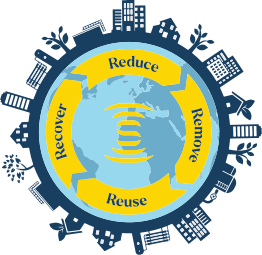
Innovation is at the heart of NSI’s mission. Their focus on “reduce, remove, reuse, and recover” drives a portfolio of advanced technologies that minimize environmental impact and maximize resource efficiency.

From membrane filtration and dissolved air flotation (DAF) systems to nutrient recovery and digital monitoring platforms, NSI continually develops and applies new ways to make water systems smarter and more sustainable.

This innovation mindset directly benefits NSU’s clients, ensuring that the solutions we provide today are designed for the challenges of tomorrow.


Synergy that Strengthens Our Mission

The relationship between NSU and NSI is far more than parent and subsidiary — it’s a true partnership built on shared values and complementary strengths.

By joining the NSI family, NSU gained access to a global platform of expertise, technologies, and resources, enhancing our ability to deliver high-performance water reuse and decentralized treatment systems across North America.

In return, NSU contributes decades of leadership in sustainable and distributed water management, helping expand NSI’s footprint and influence in the growing U.S. reuse market.


What This Means for Our Clients

Being part of Nijhuis Saur Industries brings clear benefits to NSU’s clients:

  • Depth of experience across industries and applications, backed by more than a century of global success.
  • Access to advanced technologies and proven solutions for water reuse, treatment, and resource recovery.
  • Global resources with local delivery, offering the best of both worlds — worldwide expertise combined with regional responsiveness.
  • Lifecycle partnership through design, construction, operation, and maintenance.
  • Alignment with sustainability goals, circular economy principles, and the evolving regulatory landscape.

Looking Ahead

Together with NSI, NSU is driving the future of sustainable water management. We’re continuing to expand our work in decentralized and onsite reuse systems, advance digital monitoring and optimization, and develop more resource-efficient approaches that transform how communities and industries think about water.


The Future is Water

Joining Nijhuis Saur Industries has strengthened every part of NSU — from our technology and service capabilities to our vision for a sustainable water future. Together, we’re helping clients turn challenges into opportunities and making water systems more resilient, efficient, and circular.

At NSU, we’re not just building treatment systems. We’re building the future of water — backed by a global powerhouse committed to innovation, sustainability, and partnership.


https://nsuwater.com/wp-content/uploads/2024/03/NSU-Leadership.jpg 500 500 Matthew McPherson https://nsuwater.com/wp-content/uploads/2024/02/New-NSU-logo.svg Matthew McPherson2025-11-10 00:02:472025-11-10 00:03:17Spotlight: NSI

5 Easy Ways to Conserve Water

September 14, 2025/in Blog, News


💧 5 Easy Ways to Conserve Water at Home — And Lower Your Utility Bill

At NSU Water, we’re committed to delivering safe, reliable water every day — but conserving water is a team effort. When you reduce your water use at home, you’re not only helping the environment — you’re also lowering your monthly bill.

Here are 5 simple and effective ways you can save water at home, starting today:


1. 🛠️ Fix Leaks — Even the Small Ones

That slow-dripping faucet or constantly running toilet? It’s wasting more water (and money) than you think.

Did you know?

  • A faucet that drips once per second can waste over 3,000 gallons per year.
  • A running toilet can waste up to 200 gallons a day.

Pro Tip: Add a few drops of food coloring to your toilet tank. If color appears in the bowl without flushing, you’ve got a silent leak.


2. 🚿 Upgrade to Water-Efficient Fixtures

Modern plumbing fixtures use much less water without compromising performance. Look for products with the WaterSense label — a symbol of efficiency backed by the EPA.

Top upgrades to consider:

  • Low-flow showerheads (less than 2.0 gallons per minute)
  • High-efficiency toilets (using 1.28 gallons per flush or less)
  • Aerated faucets that reduce flow while maintaining pressure

💡 Bonus: Many cities and counties offer rebates for water-efficient upgrades. Check with your local government or utility provider.


3. 🧺 Run Full Loads in Dishwashers and Washing Machines

Avoid running half-loads. Waiting until you have a full load of laundry or dishes makes every drop count.

Why it matters:

  • Modern dishwashers use as little as 3 gallons per cycle — but only when fully loaded.
  • ENERGY STAR® washing machines use 40–50% less water than older models.

Water-saving tip: Use the eco or light wash setting when possible.


4. 🚰 Turn Off the Tap When Not in Use

This small habit makes a big difference over time.

Simple changes include:

  • Turning off the faucet while brushing your teeth or shaving
  • Rinsing fruits and vegetables in a filled bowl instead of under running water

💧 Turning off the tap while brushing your teeth can save up to 8 gallons a day per person.


5. 🌱 Rethink Outdoor Watering

Lawn and garden watering accounts for a significant portion of residential water use — especially in the summer.

Smart irrigation practices:

  • Water early in the morning or after sunset to reduce evaporation
  • Use drip irrigation systems or soaker hoses for efficiency
  • Adjust sprinklers to avoid watering sidewalks and driveways

Pro Tip: Plant native or drought-resistant landscaping to dramatically reduce water needs year-round.


👣 Small Steps. Big Impact.

Saving water doesn’t require a complete lifestyle change — just a few conscious choices. By making these small changes, you’re helping preserve our community’s most vital resource and keeping more money in your pocket.

At NSU Water, we’re proud to support you in creating a more sustainable home and future.


https://nsuwater.com/wp-content/uploads/2024/10/Columbus-m.jpg 516 400 Matthew McPherson https://nsuwater.com/wp-content/uploads/2024/02/New-NSU-logo.svg Matthew McPherson2025-09-14 19:41:412025-09-14 19:43:375 Easy Ways to Conserve Water

The History of Water Infrastructure on the East Coast

August 29, 2025/in Blog, News

🏙️ A Legacy Under Pressure: The History of Water Infrastructure on the East Coast

When we turn on the tap today, it’s easy to forget the centuries of innovation, engineering, and urban planning that made reliable water access possible. On the East Coast — home to some of the oldest cities in the United States — water infrastructure was often built in the 18th and 19th centuries. And while that legacy laid the foundation for modern urban life, it now presents a serious challenge: how do you update aging systems in cities built for another era?

Let’s take a look at the history of water on the East Coast, and why modernization is both essential and difficult.


💧 The Early Days: Wells, Rain Barrels, and Wooden Pipes

In the 1600s and 1700s, East Coast cities like Boston, Philadelphia, and New York depended on:

  • Wells and springs for fresh water
  • Rain barrels to catch runoff from rooftops
  • Rivers and ponds — often polluted and unsafe — for everyday use

As populations grew, these small-scale systems quickly became inadequate. Waterborne diseases like cholera and typhoid became common, prompting cities to seek more centralized and reliable solutions.


🏗️ The Rise of Urban Waterworks

By the early 1800s, cities began constructing municipal water systems to deliver clean water to growing populations.

📍 Philadelphia

In 1801, Philadelphia opened the Fairmount Water Works, one of the first large-scale municipal water systems in the U.S. It used steam engines (and later water wheels) to pump water from the Schuylkill River into a reservoir, which then distributed it by gravity through wooden pipes.

📍 New York City

By 1842, NYC completed the Croton Aqueduct, a 41-mile system that brought fresh water from upstate into Manhattan. The engineering was remarkable — tunnels, bridges, and massive reservoirs — and it transformed public health and firefighting capacity.

📍 Boston

Boston followed with its Cochituate Aqueduct in 1848, sourcing water from distant lakes and using gravity to distribute it throughout the city.

These systems were cutting-edge for their time, and many remain in use today — a testament to 19th-century engineering, but also a reflection of how hard it is to upgrade entrenched infrastructure.


🏚️ The Challenge Today: Aging Systems, Limited Flexibility

While these early investments were visionary, many East Coast cities now face the harsh reality of aging, inflexible water infrastructure:

⚠️ Old Materials

  • Many water mains and sewer lines are over 100 years old, made from cast iron, clay, or even wood.
  • Lead service lines still exist in many cities, posing serious health risks.

⚠️ Dense Urban Development

  • Water infrastructure is buried under layers of roads, subways, and buildings — making upgrades expensive and disruptive.
  • Expanding or rerouting systems to meet modern needs is logistically challenging in tightly packed urban cores.

⚠️ Outdated Capacity

  • Legacy systems were not built to handle 21st-century demands — from population growth and high-rise development to climate-driven flooding and droughts.
  • Combined sewer systems (stormwater + wastewater) frequently overflow during heavy rain, polluting local waterways.

💡 Why Modernizing East Coast Water Systems Matters

While West Coast cities often build with scarcity and drought in mind, East Coast cities face a different challenge: adapting old systems to modern realities.

Key concerns include:

  • Water quality and safety (e.g., lead pipe removal)
  • Climate resilience (managing rising seas, stronger storms, and aging stormwater systems)
  • Equity — ensuring all communities have reliable, clean water despite aging infrastructure

But change is difficult — not due to lack of innovation, but due to legacy constraints. Replacing a century-old pipe in Manhattan or Boston isn’t just a construction job — it’s a multimillion-dollar project with traffic, public safety, and political implications.


🛠️ What’s Being Done — And What’s Needed

Despite the limitations, progress is being made:

  • Federal funding (like the Bipartisan Infrastructure Law) is helping cities tackle long-deferred upgrades.
  • Smart water technologies are helping utilities monitor leaks and usage in real time.
  • Green infrastructure (rain gardens, permeable pavement) is helping manage stormwater more sustainably.

But fully modernizing East Coast water systems will take time, political will, and community support.


🔄 The Path Forward: Honor the Past, Build for the Future

The East Coast was the birthplace of American water engineering. The same spirit that built aqueducts, reservoirs, and underground tunnels in the 1800s must now guide us into the future.

At NSU Water, we understand the weight of that legacy — and the urgency of modernizing it. While change isn’t easy in cities built centuries ago, it’s never been more important. Because clean, reliable water isn’t a privilege of the past — it’s a promise we must renew for the future.


https://nsuwater.com/wp-content/uploads/2015/02/Battery-Park-3.jpg 571 857 Matthew McPherson https://nsuwater.com/wp-content/uploads/2024/02/New-NSU-logo.svg Matthew McPherson2025-08-29 19:47:372025-09-14 19:48:37The History of Water Infrastructure on the East Coast

Why Water Reuse Is Critical

August 1, 2025/in Blog, News


♻️ Why Water Reuse Is Critical for the Future of the Western United States

As water scarcity becomes an increasingly urgent issue across the Western U.S., the concept of water reuse is gaining traction — and for good reason.

From prolonged droughts and dwindling snowpacks to booming population growth, the West faces growing pressure on its limited water resources. At NSU Water, we believe that sustainable water reuse isn’t just an option — it’s a necessity for ensuring long-term water security.


💧 What Is Water Reuse?

Water reuse, also known as water recycling or reclaimed water, is the process of treating wastewater (from homes, businesses, or industry) so it can be safely used again — either for non-potable uses like irrigation and industrial cooling, or for indirect or direct potable reuse (after advanced treatment).

Rather than letting treated wastewater be discharged and lost, reuse systems capture, clean, and repurpose it — creating a reliable, drought-resistant water source.


🚨 Why the Western U.S. Needs Water Reuse Now

1. Chronic Drought Conditions

The Western U.S. has experienced over two decades of persistent drought, driven by climate change and reduced snowmelt. This has led to:

  • Critically low levels in major reservoirs (like Lake Mead and Lake Powell)
  • Reduced groundwater recharge
  • Water restrictions in agriculture and urban areas

Water reuse helps bridge the gap between supply and demand by creating a local, sustainable source that doesn’t depend on precipitation.


2. Growing Populations, Shrinking Supplies

Cities across the West — from Phoenix and Las Vegas to Denver and Los Angeles — continue to grow, placing more demand on already stressed water systems.

Water reuse helps meet this demand by reducing reliance on imported water from rivers, lakes, and aquifers that are under pressure.


3. Climate Change and Water Uncertainty

With rising temperatures and more unpredictable weather patterns, traditional water forecasting is becoming harder. Snowpack — historically a key source of water storage — is melting earlier and faster, leading to mismatches between water availability and seasonal needs.

Reused water is predictable, controllable, and locally sourced — making it a smart tool in adapting to climate uncertainty.


🌿 Benefits of Water Reuse

  • ✅ Increased Water Reliability
    Treated water can be used year-round, even during droughts or shortages.
  • ✅ Environmental Protection
    Reduces discharges to rivers and oceans, protecting aquatic ecosystems.
  • ✅ Supports Agriculture and Industry
    Reclaimed water is ideal for irrigation, cooling systems, and other non-potable needs — freeing up drinking water for residential use.
  • ✅ Cost-Effective Long Term
    While infrastructure investment is required, reuse reduces dependence on expensive water imports or groundwater pumping.

🛠️ Examples of Water Reuse in Action

  • Orange County, CA: Operates the world’s largest indirect potable reuse project, producing over 100 million gallons per day of purified water.
  • Tucson, AZ: Uses reclaimed water to irrigate parks, golf courses, and landscapes — conserving drinking water.
  • Aurora, CO: Has built a state-of-the-art reuse system to supplement its municipal water supply.

At NSU Water, we are exploring and supporting solutions like these to ensure a resilient, drought-proof future for our community.


🚰 What Can You Do?

Even if your area doesn’t yet use reclaimed water for drinking, you can still support water reuse by:

  • Using recycled water for landscaping (where available)
  • Supporting local infrastructure investments in reuse technology
  • Educating others about the safety and science of water recycling
  • Reducing overall water use at home to help stretch supplies

🔄 The Future of Water Is Circular

The traditional “use it once and throw it away” model is no longer sustainable — especially in the West. By embracing a circular approach to water, where every drop is used more than once, we can protect our resources, support growth, and safeguard our future.

At NSU Water, we’re committed to advancing smart, sustainable solutions like water reuse. Because every drop matters.


https://nsuwater.com/wp-content/uploads/2024/10/Bennett-Enviornmental-Associates-2.jpg 400 575 Matthew McPherson https://nsuwater.com/wp-content/uploads/2024/02/New-NSU-logo.svg Matthew McPherson2025-08-01 19:44:342025-09-14 19:46:12Why Water Reuse Is Critical
Page 1 of 8123›»

Latest News

  • Design-Build-Operate: The Advantages of a Single-Source Water Infrastructure Partner
  • Why Hospitals Should Prioritize Sustainable Water Infrastructure
  • How Data Centers Can Address Water Challenges Through On-Site Recycling

Follow

Who We Are

  • About NSU
  • Our Story
  • Our Team
  • Our Board
  • Our Partners

Who We Are

About Us
Our Team
Our Partners

What We Do

Our Projects
Solutions
Services
Sectors

Resources

Careers
Media
Privacy Policy
Contact Us

Follow Us

  • (908) 359-5501
  • info@nsuwater.com

Who We Are

About Us
Our Team
Our Partners

What We Do

Our Projects
Solutions
Services
Sectors

Resources

Careers
Media
Privacy Policy
Contact Us

Follow Us
  • (908) 359-5501
  • info@nsuwater.com

© Copyright 2024 – NSU, Natural Systems Utilities

Scroll to top