• Who We Are
    • Natural Systems Utilities
    • About NSU
      • Our Story
      • Our Team
      • Our Partners
      • Our Careers
      • Bennett Environmental Associates
      • News
    • Our Projects
      • Battery Park
      • Domino Sugar Redevelopment
      • Gillette Stadium & Patriot Place
      • View All Projects
  • What We Do
    • Services
      • Design-Build
      • Design-Build-Operate
      • Operate
      • Maintenance
      • Ownership
      • Our Projects
    • Solutions
      • Environmental Consulting
      • Operations
      • Wastewater
      • Water Reuse
      • Water Supply
    • Sectors
      • Residential, Commercial, Mixed Use
      • Sporting Complex
      • Higher Education
      • Tech Campuses
      • Food & Beverage
      • Data Centers
      • Hospitals & Health Care
      • Hotels & Resorts
      • Municipal Government
  • Contact Us
  • Menu Menu

Spotlight: NSI

November 10, 2025/in Blog, News

Spotlight on Our Parent Company: Nijhuis Saur Industries (NSI)

Here at Natural Systems Utilities (NSU), we’re proud to be part of the Nijhuis Saur Industries (NSI) family. In this post, we’re taking a closer look at how NSI’s global reach, expertise, and innovation strengthen everything we do for our clients and partners.


A Legacy of Innovation and Water Expertise

With roots tracing back to 1904, NSI has over a century of experience solving complex water challenges. What began as a small machine factory has evolved into one of the world’s premier water and resource management companies.

Through decades of innovation — from early wastewater treatment systems to advanced resource recovery and reuse technologies — NSI has built a reputation for engineering excellence and sustainable solutions.

For NSU, being part of this legacy means we’re backed by generations of knowledge, proven results, and a passion for protecting and reimagining water.


A Global Platform with Local Reach

NSI operates around the world, serving clients in over 140 countries through a network of regional centers of excellence. This global platform combines world-class innovation with local expertise, ensuring that solutions are both cutting-edge and tailored to each community and industry.

For NSU and our clients, this means access to a global ecosystem — the scale, resources, and best practices of an international leader, paired with the hands-on service and responsiveness you expect from a trusted local partner.


Comprehensive Capabilities Across the Water Cycle

NSI brings a full spectrum of capabilities across the water value chain — from consulting and engineering to turnkey delivery and long-term operation and maintenance.

Its expertise spans:

  • Consulting and process design to help clients develop water strategies that support sustainability and performance goals.
  • Design-Build-Finance-Operate-Maintain (DBFOM) and EPC project delivery to bring complete systems online efficiently and reliably.
  • Mobile and modular systems that make it possible to deploy treatment and reuse solutions quickly and flexibly.
  • Operations and maintenance services that ensure facilities run smoothly and efficiently throughout their lifecycle.

These capabilities expand NSU’s ability to deliver fully integrated, end-to-end water solutions — reducing risk, improving resilience, and maximizing value.


Technology and Innovation at the Core

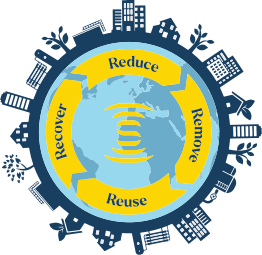
Innovation is at the heart of NSI’s mission. Their focus on “reduce, remove, reuse, and recover” drives a portfolio of advanced technologies that minimize environmental impact and maximize resource efficiency.

From membrane filtration and dissolved air flotation (DAF) systems to nutrient recovery and digital monitoring platforms, NSI continually develops and applies new ways to make water systems smarter and more sustainable.

This innovation mindset directly benefits NSU’s clients, ensuring that the solutions we provide today are designed for the challenges of tomorrow.


Synergy that Strengthens Our Mission

The relationship between NSU and NSI is far more than parent and subsidiary — it’s a true partnership built on shared values and complementary strengths.

By joining the NSI family, NSU gained access to a global platform of expertise, technologies, and resources, enhancing our ability to deliver high-performance water reuse and decentralized treatment systems across North America.

In return, NSU contributes decades of leadership in sustainable and distributed water management, helping expand NSI’s footprint and influence in the growing U.S. reuse market.


What This Means for Our Clients

Being part of Nijhuis Saur Industries brings clear benefits to NSU’s clients:

  • Depth of experience across industries and applications, backed by more than a century of global success.
  • Access to advanced technologies and proven solutions for water reuse, treatment, and resource recovery.
  • Global resources with local delivery, offering the best of both worlds — worldwide expertise combined with regional responsiveness.
  • Lifecycle partnership through design, construction, operation, and maintenance.
  • Alignment with sustainability goals, circular economy principles, and the evolving regulatory landscape.

Looking Ahead

Together with NSI, NSU is driving the future of sustainable water management. We’re continuing to expand our work in decentralized and onsite reuse systems, advance digital monitoring and optimization, and develop more resource-efficient approaches that transform how communities and industries think about water.


The Future is Water

Joining Nijhuis Saur Industries has strengthened every part of NSU — from our technology and service capabilities to our vision for a sustainable water future. Together, we’re helping clients turn challenges into opportunities and making water systems more resilient, efficient, and circular.

At NSU, we’re not just building treatment systems. We’re building the future of water — backed by a global powerhouse committed to innovation, sustainability, and partnership.

 

https://nsuwater.com/wp-content/uploads/2024/03/NSU-Leadership.jpg 500 500 Matthew McPherson https://nsuwater.com/wp-content/uploads/2024/02/New-NSU-logo.svg Matthew McPherson2025-11-10 00:02:472025-11-10 00:03:17Spotlight: NSI

5 Easy Ways to Conserve Water

September 14, 2025/in Blog, News


💧 5 Easy Ways to Conserve Water at Home — And Lower Your Utility Bill

At NSU Water, we’re committed to delivering safe, reliable water every day — but conserving water is a team effort. When you reduce your water use at home, you’re not only helping the environment — you’re also lowering your monthly bill.

Here are 5 simple and effective ways you can save water at home, starting today:


1. 🛠️ Fix Leaks — Even the Small Ones

That slow-dripping faucet or constantly running toilet? It’s wasting more water (and money) than you think.

Did you know?

  • A faucet that drips once per second can waste over 3,000 gallons per year.
  • A running toilet can waste up to 200 gallons a day.

Pro Tip: Add a few drops of food coloring to your toilet tank. If color appears in the bowl without flushing, you’ve got a silent leak.


2. 🚿 Upgrade to Water-Efficient Fixtures

Modern plumbing fixtures use much less water without compromising performance. Look for products with the WaterSense label — a symbol of efficiency backed by the EPA.

Top upgrades to consider:

  • Low-flow showerheads (less than 2.0 gallons per minute)
  • High-efficiency toilets (using 1.28 gallons per flush or less)
  • Aerated faucets that reduce flow while maintaining pressure

💡 Bonus: Many cities and counties offer rebates for water-efficient upgrades. Check with your local government or utility provider.


3. 🧺 Run Full Loads in Dishwashers and Washing Machines

Avoid running half-loads. Waiting until you have a full load of laundry or dishes makes every drop count.

Why it matters:

  • Modern dishwashers use as little as 3 gallons per cycle — but only when fully loaded.
  • ENERGY STAR® washing machines use 40–50% less water than older models.

Water-saving tip: Use the eco or light wash setting when possible.


4. 🚰 Turn Off the Tap When Not in Use

This small habit makes a big difference over time.

Simple changes include:

  • Turning off the faucet while brushing your teeth or shaving
  • Rinsing fruits and vegetables in a filled bowl instead of under running water

💧 Turning off the tap while brushing your teeth can save up to 8 gallons a day per person.


5. 🌱 Rethink Outdoor Watering

Lawn and garden watering accounts for a significant portion of residential water use — especially in the summer.

Smart irrigation practices:

  • Water early in the morning or after sunset to reduce evaporation
  • Use drip irrigation systems or soaker hoses for efficiency
  • Adjust sprinklers to avoid watering sidewalks and driveways

Pro Tip: Plant native or drought-resistant landscaping to dramatically reduce water needs year-round.


👣 Small Steps. Big Impact.

Saving water doesn’t require a complete lifestyle change — just a few conscious choices. By making these small changes, you’re helping preserve our community’s most vital resource and keeping more money in your pocket.

At NSU Water, we’re proud to support you in creating a more sustainable home and future.


https://nsuwater.com/wp-content/uploads/2024/10/Columbus-m.jpg 516 400 Matthew McPherson https://nsuwater.com/wp-content/uploads/2024/02/New-NSU-logo.svg Matthew McPherson2025-09-14 19:41:412025-09-14 19:43:375 Easy Ways to Conserve Water

The History of Water Infrastructure on the East Coast

August 29, 2025/in Blog, News

🏙️ A Legacy Under Pressure: The History of Water Infrastructure on the East Coast

When we turn on the tap today, it’s easy to forget the centuries of innovation, engineering, and urban planning that made reliable water access possible. On the East Coast — home to some of the oldest cities in the United States — water infrastructure was often built in the 18th and 19th centuries. And while that legacy laid the foundation for modern urban life, it now presents a serious challenge: how do you update aging systems in cities built for another era?

Let’s take a look at the history of water on the East Coast, and why modernization is both essential and difficult.


💧 The Early Days: Wells, Rain Barrels, and Wooden Pipes

In the 1600s and 1700s, East Coast cities like Boston, Philadelphia, and New York depended on:

  • Wells and springs for fresh water
  • Rain barrels to catch runoff from rooftops
  • Rivers and ponds — often polluted and unsafe — for everyday use

As populations grew, these small-scale systems quickly became inadequate. Waterborne diseases like cholera and typhoid became common, prompting cities to seek more centralized and reliable solutions.


🏗️ The Rise of Urban Waterworks

By the early 1800s, cities began constructing municipal water systems to deliver clean water to growing populations.

📍 Philadelphia

In 1801, Philadelphia opened the Fairmount Water Works, one of the first large-scale municipal water systems in the U.S. It used steam engines (and later water wheels) to pump water from the Schuylkill River into a reservoir, which then distributed it by gravity through wooden pipes.

📍 New York City

By 1842, NYC completed the Croton Aqueduct, a 41-mile system that brought fresh water from upstate into Manhattan. The engineering was remarkable — tunnels, bridges, and massive reservoirs — and it transformed public health and firefighting capacity.

📍 Boston

Boston followed with its Cochituate Aqueduct in 1848, sourcing water from distant lakes and using gravity to distribute it throughout the city.

These systems were cutting-edge for their time, and many remain in use today — a testament to 19th-century engineering, but also a reflection of how hard it is to upgrade entrenched infrastructure.


🏚️ The Challenge Today: Aging Systems, Limited Flexibility

While these early investments were visionary, many East Coast cities now face the harsh reality of aging, inflexible water infrastructure:

⚠️ Old Materials

  • Many water mains and sewer lines are over 100 years old, made from cast iron, clay, or even wood.
  • Lead service lines still exist in many cities, posing serious health risks.

⚠️ Dense Urban Development

  • Water infrastructure is buried under layers of roads, subways, and buildings — making upgrades expensive and disruptive.
  • Expanding or rerouting systems to meet modern needs is logistically challenging in tightly packed urban cores.

⚠️ Outdated Capacity

  • Legacy systems were not built to handle 21st-century demands — from population growth and high-rise development to climate-driven flooding and droughts.
  • Combined sewer systems (stormwater + wastewater) frequently overflow during heavy rain, polluting local waterways.

💡 Why Modernizing East Coast Water Systems Matters

While West Coast cities often build with scarcity and drought in mind, East Coast cities face a different challenge: adapting old systems to modern realities.

Key concerns include:

  • Water quality and safety (e.g., lead pipe removal)
  • Climate resilience (managing rising seas, stronger storms, and aging stormwater systems)
  • Equity — ensuring all communities have reliable, clean water despite aging infrastructure

But change is difficult — not due to lack of innovation, but due to legacy constraints. Replacing a century-old pipe in Manhattan or Boston isn’t just a construction job — it’s a multimillion-dollar project with traffic, public safety, and political implications.


🛠️ What’s Being Done — And What’s Needed

Despite the limitations, progress is being made:

  • Federal funding (like the Bipartisan Infrastructure Law) is helping cities tackle long-deferred upgrades.
  • Smart water technologies are helping utilities monitor leaks and usage in real time.
  • Green infrastructure (rain gardens, permeable pavement) is helping manage stormwater more sustainably.

But fully modernizing East Coast water systems will take time, political will, and community support.


🔄 The Path Forward: Honor the Past, Build for the Future

The East Coast was the birthplace of American water engineering. The same spirit that built aqueducts, reservoirs, and underground tunnels in the 1800s must now guide us into the future.

At NSU Water, we understand the weight of that legacy — and the urgency of modernizing it. While change isn’t easy in cities built centuries ago, it’s never been more important. Because clean, reliable water isn’t a privilege of the past — it’s a promise we must renew for the future.


https://nsuwater.com/wp-content/uploads/2015/02/Battery-Park-3.jpg 571 857 Matthew McPherson https://nsuwater.com/wp-content/uploads/2024/02/New-NSU-logo.svg Matthew McPherson2025-08-29 19:47:372025-09-14 19:48:37The History of Water Infrastructure on the East Coast

Why Water Reuse Is Critical

August 1, 2025/in Blog, News


♻️ Why Water Reuse Is Critical for the Future of the Western United States

As water scarcity becomes an increasingly urgent issue across the Western U.S., the concept of water reuse is gaining traction — and for good reason.

From prolonged droughts and dwindling snowpacks to booming population growth, the West faces growing pressure on its limited water resources. At NSU Water, we believe that sustainable water reuse isn’t just an option — it’s a necessity for ensuring long-term water security.


💧 What Is Water Reuse?

Water reuse, also known as water recycling or reclaimed water, is the process of treating wastewater (from homes, businesses, or industry) so it can be safely used again — either for non-potable uses like irrigation and industrial cooling, or for indirect or direct potable reuse (after advanced treatment).

Rather than letting treated wastewater be discharged and lost, reuse systems capture, clean, and repurpose it — creating a reliable, drought-resistant water source.


🚨 Why the Western U.S. Needs Water Reuse Now

1. Chronic Drought Conditions

The Western U.S. has experienced over two decades of persistent drought, driven by climate change and reduced snowmelt. This has led to:

  • Critically low levels in major reservoirs (like Lake Mead and Lake Powell)
  • Reduced groundwater recharge
  • Water restrictions in agriculture and urban areas

Water reuse helps bridge the gap between supply and demand by creating a local, sustainable source that doesn’t depend on precipitation.


2. Growing Populations, Shrinking Supplies

Cities across the West — from Phoenix and Las Vegas to Denver and Los Angeles — continue to grow, placing more demand on already stressed water systems.

Water reuse helps meet this demand by reducing reliance on imported water from rivers, lakes, and aquifers that are under pressure.


3. Climate Change and Water Uncertainty

With rising temperatures and more unpredictable weather patterns, traditional water forecasting is becoming harder. Snowpack — historically a key source of water storage — is melting earlier and faster, leading to mismatches between water availability and seasonal needs.

Reused water is predictable, controllable, and locally sourced — making it a smart tool in adapting to climate uncertainty.


🌿 Benefits of Water Reuse

  • ✅ Increased Water Reliability
    Treated water can be used year-round, even during droughts or shortages.
  • ✅ Environmental Protection
    Reduces discharges to rivers and oceans, protecting aquatic ecosystems.
  • ✅ Supports Agriculture and Industry
    Reclaimed water is ideal for irrigation, cooling systems, and other non-potable needs — freeing up drinking water for residential use.
  • ✅ Cost-Effective Long Term
    While infrastructure investment is required, reuse reduces dependence on expensive water imports or groundwater pumping.

🛠️ Examples of Water Reuse in Action

  • Orange County, CA: Operates the world’s largest indirect potable reuse project, producing over 100 million gallons per day of purified water.
  • Tucson, AZ: Uses reclaimed water to irrigate parks, golf courses, and landscapes — conserving drinking water.
  • Aurora, CO: Has built a state-of-the-art reuse system to supplement its municipal water supply.

At NSU Water, we are exploring and supporting solutions like these to ensure a resilient, drought-proof future for our community.


🚰 What Can You Do?

Even if your area doesn’t yet use reclaimed water for drinking, you can still support water reuse by:

  • Using recycled water for landscaping (where available)
  • Supporting local infrastructure investments in reuse technology
  • Educating others about the safety and science of water recycling
  • Reducing overall water use at home to help stretch supplies

🔄 The Future of Water Is Circular

The traditional “use it once and throw it away” model is no longer sustainable — especially in the West. By embracing a circular approach to water, where every drop is used more than once, we can protect our resources, support growth, and safeguard our future.

At NSU Water, we’re committed to advancing smart, sustainable solutions like water reuse. Because every drop matters.


https://nsuwater.com/wp-content/uploads/2024/10/Bennett-Enviornmental-Associates-2.jpg 400 575 Matthew McPherson https://nsuwater.com/wp-content/uploads/2024/02/New-NSU-logo.svg Matthew McPherson2025-08-01 19:44:342025-09-14 19:46:12Why Water Reuse Is Critical

Major Water Regulations Are Coming in 2026

June 14, 2025/in Blog, News

🚨 What Major Water Regulations Are Coming in 2026?

As water issues become more pressing across the United States — from contamination concerns to climate-driven droughts — new federal regulations are on the horizon. In 2026, several major rules will impact water utilities, municipalities, and consumers, especially in how we manage drinking water, wastewater, and public reporting.

Here’s a breakdown of the key water-related regulations expected to take effect or advance significantly in 2026:


1. PFAS Drinking Water Regulations

New national drinking water standards are being phased in to address PFAS — also known as “forever chemicals” — including PFOA, PFOS, and other harmful compounds.

What’s Coming:

  • Water systems will need to monitor for specific PFAS chemicals starting in 2026.
  • Compliance with Maximum Contaminant Levels (MCLs) will follow in later years.
  • Utilities will need to adopt new treatment technologies or upgrade existing systems.

Why It Matters:

PFAS are linked to health risks and are extremely persistent in the environment. These new rules represent one of the most significant shifts in drinking water regulation in decades.


2. Consumer Confidence Report (CCR) Rule Revisions

Updates to how public water systems communicate with customers are being finalized, with enforcement starting soon after.

What’s Changing:

  • CCRs must be easier to understand and more accessible to non-English speakers.
  • Some water systems will be required to issue CCRs twice a year.
  • Reports will include clearer health risk explanations and more detailed lead information.

Timeline:

Although enforcement starts in 2027, the first reports under the new rules will reflect 2026 water quality data.


3. Wastewater Regulations for Power Plants

The EPA is revising its wastewater discharge limits for steam electric power plants — a major move to reduce pollution into rivers and lakes.

What to Expect:

  • Stricter limits on toxic metals and other discharges.
  • Updated guidelines for treatment and disposal processes.
  • Potential ripple effects on permitting and regional water quality standards.

4. Six-Year Review of National Drinking Water Standards

Every six years, federal regulators review and potentially update existing drinking water rules. The upcoming review may bring changes to several long-standing standards.

Possible Focus Areas:

  • Disinfection byproducts
  • Microbial contaminants
  • Total and hexavalent chromium
  • Emerging health concerns related to long-term chemical exposure

These updates will guide future investments in water treatment and distribution systems.


5. Lead and Copper Rule Improvements (LCRI)

The federal government is finalizing a sweeping update to how utilities manage lead in drinking water — one of the most critical public health issues in water infrastructure today.

Key Changes:

  • Tighter requirements for lead service line replacement
  • Lower action levels for lead and copper concentrations
  • More comprehensive testing in schools and childcare facilities

Implications:

Many systems will need to map their service lines and prepare for full replacement efforts, with planning beginning before 2026.


6. Waters of the United States (WOTUS) Definition Revisions

Federal agencies are revising how they define which water bodies are protected under the Clean Water Act.

What’s At Stake:

  • The definition affects permits for development, agriculture, and stormwater runoff.
  • Changing the definition can either expand or restrict which streams, wetlands, and ditches fall under federal jurisdiction.

This rule will shape how both rural and urban areas manage surface water protections.


Why These Changes Matter

While 2026 may seem like a distant horizon, utilities, businesses, and local governments must begin preparing now. New regulations mean:

  • Infrastructure upgrades
  • Higher compliance costs
  • More transparent communication with the public
  • Greater accountability for water quality

What Can Utilities and Communities Do Now?

  • Conduct early assessments of treatment systems and service lines
  • Develop capital plans that account for upcoming requirements
  • Engage with community members about what’s changing and why
  • Apply for federal and state funding to support compliance projects

Looking Ahead

The water regulations arriving in 2026 reflect a broader shift toward protecting public health, ensuring environmental sustainability, and modernizing outdated infrastructure. It’s a turning point — one that calls for investment, innovation, and collaboration at every level.

At NSU Water, we’re committed to staying ahead of these changes to keep our systems resilient, our communities informed, and our water safe for generations to come.


https://nsuwater.com/wp-content/uploads/2023/12/m-Wastwater-Header.jpg 1392 1080 Matthew McPherson https://nsuwater.com/wp-content/uploads/2024/02/New-NSU-logo.svg Matthew McPherson2025-06-14 19:50:442025-09-14 19:55:25Major Water Regulations Are Coming in 2026

NSU and Aquachem at ISPE Conference in Foxboro, MA

October 8, 2024/in Blog, News

NSU and Aquachem Showcase Water Innovation at the October 3rd ISPE Conference in Foxboro, MA

https://nsuwater.com/wp-content/uploads/2024/10/NSU-Aqua-Chem.jpg 928 1210 Admin https://nsuwater.com/wp-content/uploads/2024/02/New-NSU-logo.svg Admin2024-10-08 11:24:072024-10-08 11:25:50NSU and Aquachem at ISPE Conference in Foxboro, MA

Spotlight on a Business Partner: Natural Systems Utilities

October 8, 2024/in Blog, News

Spotlight on a Business Partner:
Natural Systems Utilities

Natural Systems Utilities (NSU), a new BPC 2024 business partner, is an environmental firm specializing in the design, construction, and operations of decentralized water treatment, wastewater treatment, and water reuse solutions, including Innovative and Alternative (I/A) Systems. Working with private, municipal, institutional, and commercial entities, NSU helps its clients meet long-term stewardship and sustainability goals. NSU’s mission statement is one that BPC members can really get excited about: “To reimagine water by providing innovative solutions that safeguard the world’s water resources.”

Established in 1984 and headquartered in New Jersey, NSU’s original focus for expansion was in the Northeast, where it has had a presence in Massachusetts for over 25 years. NSU’s 2019 purchase of Bennett Environmental Associates, a Brewster-based environmental engineering firm established by Brewster resident Dave Bennett, is how the BPC connected with NSU when its Vice President, Adam Stern, attended the BPC-sponsored talk given by Mr. Bennett titled “Decentralized Wastewater Management” at the Brewster Ladies Library last spring. NSU has additional offices in California and Minnesota.

A fan of Cape Cod, Adam has been coming to the Cape for years. His earliest memories are of walking out onto the sands at low tide in Ptown. He has been at NSU for 30 years and has led the engineering and construction groups, and currently serves in a Business
Development role.

READ ORIGINAL NEWSLETTER HERE

https://nsuwater.com/wp-content/uploads/2024/10/Spotlight-on-a-Business-Partner-Natural-Systems-Utilities-2.jpg 420 1090 Admin https://nsuwater.com/wp-content/uploads/2024/02/New-NSU-logo.svg Admin2024-10-08 11:07:382024-10-08 11:09:30Spotlight on a Business Partner: Natural Systems Utilities

Unveiling the Time Capsule of Natural Systems Utilities

August 8, 2024/in Blog, News

Celebrating 40 Years of Innovation: Unveiling the Time Capsule of Natural Systems Utilities

As Natural Systems Utilities (NSU) proudly marks its 40th anniversary, we recently took a nostalgic journey back in time by opening a time capsule buried 25 years ago. This special occasion not only celebrates four decades of growth and innovation but also highlights the enduring dedication of our team members who have been the backbone of our success.

A Glimpse into the Past

The time capsule, carefully sealed and buried a quarter-century ago, was unearthed with much anticipation. What lay inside offered a fascinating glimpse into the world of the 1990s and the early days of our company. Among the items discovered were:

– Newspapers: These papers provided a snapshot of the world as it was 25 years ago, capturing the headlines and major events of the time. It was a reminder of how much has changed in the world, and in our industry, since then.

– Desk Phone: A classic symbol of pre-digital communication, the desk phone served as a reminder of how far technology has come. The transition from these phones to today’s sophisticated communication tools reflects the rapid advancements in our field.

– Floppy Disk: Once a staple for data storage, the floppy disk represented the early days of digital information management. Today, we’ve moved to cloud-based systems and cutting-edge technology, but it’s fascinating to see where we started.

– Ford L8000 Diesel Truck Badge: This 1980s emblem from a Ford L8000 Diesel truck was a testament to the equipment and machinery that supported our early operations. It symbolized the hard work and dedication that went into building our infrastructure.

– Branded Items from Applied Water Management: Before becoming Natural Systems Utilities, we operated under the name Applied Water Management. The branded items from this earlier era were a poignant reminder of our roots and the foundational values that have guided us through the years.

Reflecting on Our Journey

As we look back, it’s evident that our journey has been marked by significant milestones and remarkable achievements. From our humble beginnings as Applied Water Management to becoming Natural Systems Utilities, our evolution reflects not just technological progress but also the unwavering commitment of our employees.

Our success is deeply intertwined with the hard work, dedication, and passion of our team members—both past and present. Their commitment to our clients and to advancing our mission has been instrumental in our growth and achievements.

A Heartfelt Thank You

To all our employees, past and present, we extend our deepest gratitude. Your tireless efforts and steadfast dedication have been crucial in shaping our company’s history and success. This milestone is not just a celebration of our past but also a tribute to the incredible people who have made it all possible.

Looking Forward

As we celebrate this 40th anniversary and reflect on the past, we are also excited about the future. The time capsule serves as a reminder of how far we’ve come and inspires us to continue pushing boundaries and striving for excellence.

Thank you for being an integral part of Natural Systems Utilities’ journey. Here’s to many more years of innovation, growth, and success. Together, we’ll continue to advance our mission of providing exceptional water management solutions.

#MissionWater

https://nsuwater.com/wp-content/uploads/2024/08/1723062080372.jpg 1536 2048 Matthew McPherson https://nsuwater.com/wp-content/uploads/2024/02/New-NSU-logo.svg Matthew McPherson2024-08-08 16:27:062024-08-13 16:36:40Unveiling the Time Capsule of Natural Systems Utilities

Design-Build Water Reuse

April 19, 2024/in Blog, News

In the pursuit of sustainable water management, design-build water reuse projects are emerging as innovative solutions to address the pressing challenges of water scarcity and pollution. By integrating engineering expertise with holistic design principles, these projects harness the potential of water reuse to transform wastewater into a valuable resource. In this blog, we explore the concept of design-build water reuse, its benefits, implementation strategies, and the transformative impact it holds for creating more resilient and sustainable water systems.

Understanding Design-Build Water Reuse
Design-build water reuse involves a collaborative approach that integrates the design, construction, and operation of water reuse systems into a single, streamlined process. Unlike traditional project delivery methods that separate design and construction phases, design-build projects leverage interdisciplinary teams to optimize efficiency, minimize costs, and accelerate project delivery.

The Benefits of Design-Build Water Reuse
Enhanced Collaboration and Efficiency
Design-build projects foster collaboration between designers, engineers, contractors, and stakeholders from project inception to completion. By integrating diverse perspectives and expertise, these projects streamline decision-making processes, reduce project timelines, and enhance overall efficiency.

Customized Solutions and Innovation
Design-build approaches allow for flexibility and creativity in developing tailored water reuse solutions to meet specific project goals and site constraints. By fostering innovation and adaptive design principles, design-build projects can incorporate cutting-edge technologies and best practices to optimize system performance and maximize resource recovery.

Cost Savings and Risk Management
Design-build delivery methods offer potential cost savings by minimizing change orders, reducing project delays, and optimizing construction schedules. By bundling design and construction services under a single contract, design-build projects streamline project management and mitigate risks associated with coordination errors and communication breakdowns.

Strategies for Implementing Design-Build Water Reuse
Comprehensive Needs Assessment
Thorough site assessments and stakeholder engagement are essential for understanding project requirements, identifying water reuse opportunities, and defining project objectives. Conducting feasibility studies and risk assessments can help inform decision-making and guide the development of cost-effective and sustainable water reuse solutions.

Integrated Design and Planning
Integrating design and planning processes from the outset enables project teams to consider multiple factors, including site conditions, regulatory requirements, water quality objectives, and end-user needs. Adopting a holistic approach to design and planning facilitates the development of resilient and adaptable water reuse systems that optimize resource utilization and minimize environmental impacts.

Performance Monitoring and Optimization
Continuous monitoring and evaluation of water reuse systems are critical for ensuring operational efficiency, maintaining water quality standards, and identifying opportunities for optimization. Implementing robust monitoring protocols and data management systems enables project teams to track system performance, identify trends, and make informed decisions to enhance system reliability and effectiveness.

Conclusion: Shaping a Sustainable Water Future
Design-build water reuse projects represent a paradigm shift in water management, offering integrated solutions to address water scarcity, enhance resilience, and promote environmental sustainability. By leveraging interdisciplinary collaboration, innovative design principles, and adaptive management approaches, these projects have the potential to transform wastewater into a valuable resource for communities, industries, and ecosystems.

As we confront the challenges of a rapidly changing world, embracing design-build water reuse approaches is essential for creating resilient, resource-efficient water systems that meet the needs of present and future generations. Through strategic planning, stakeholder engagement, and a commitment to innovation, we can harness the power of design-build water reuse to build a more sustainable and water-secure future for all.

https://nsuwater.com/wp-content/uploads/2024/02/Water-Reuse-Earth-Graphic.png 533 545 Matthew McPherson https://nsuwater.com/wp-content/uploads/2024/02/New-NSU-logo.svg Matthew McPherson2024-04-19 15:37:522024-04-19 15:37:52Design-Build Water Reuse

Sustainable Solutions: Water Reuse on College Campuses

March 15, 2024/in Blog, News

In the face of environmental challenges, the importance of sustainability has become increasingly evident. Among the myriad of issues, water scarcity stands out as a critical concern, prompting innovative solutions across various sectors. College campuses, as hubs of education and innovation, have a unique opportunity to lead by example in implementing sustainable practices. One such practice gaining traction is water reuse.

The Imperative of Water Reuse
Water scarcity is a pressing global issue exacerbated by factors like climate change, population growth, and inefficient water management. According to the United Nations, by 2025, an estimated 1.8 billion people will be living in regions with absolute water scarcity, with two-thirds of the world’s population potentially facing water-stressed conditions. In this context, finding sustainable ways to manage and conserve water resources is paramount.

College campuses, with their substantial water consumption due to academic, residential, and recreational activities, can significantly contribute to water conservation efforts. Implementing water reuse systems not only reduces water demand but also promotes a culture of environmental responsibility among students, faculty, and staff.

Strategies for Water Reuse
Greywater Recycling
Greywater, wastewater generated from activities like bathing, laundry, and dishwashing, can be treated and reused for non-potable purposes such as landscape irrigation, toilet flushing, and cooling systems. Installing greywater recycling systems on college campuses offers a practical way to minimize freshwater consumption for non-drinking purposes.

Rainwater Harvesting
Rainwater harvesting involves collecting and storing rainwater for later use. College campuses can utilize rainwater for landscaping, flushing toilets, and other non-potable applications. Implementing rainwater harvesting systems not only reduces reliance on municipal water sources but also mitigates stormwater runoff, which can help prevent pollution of local water bodies.

Onsite Wastewater Treatment
Onsite wastewater treatment facilities can treat sewage and wastewater generated on campus to a quality suitable for non-potable reuse. These systems utilize various treatment processes such as filtration, biological treatment, and disinfection to purify wastewater. By treating and reusing wastewater locally, colleges can reduce their environmental impact and decrease their dependence on centralized wastewater treatment facilities.

Benefits of Water Reuse on College Campuses
Environmental Sustainability
Implementing water reuse systems helps colleges reduce their environmental footprint by conserving precious freshwater resources and minimizing wastewater discharge into the environment. By adopting sustainable water management practices, campuses can contribute to the preservation of ecosystems and biodiversity.

Cost Savings
Water reuse initiatives can lead to significant cost savings for college campuses in the long run. By reducing water consumption and wastewater discharge, colleges can lower their utility bills and operational expenses. Additionally, investing in water reuse infrastructure may qualify campuses for government incentives or rebates, further enhancing financial benefits.

Educational Opportunities
Water reuse initiatives provide valuable learning opportunities for students across various disciplines, including environmental science, engineering, and sustainability studies. Incorporating water reuse projects into curricula allows students to gain practical experience and develop skills relevant to addressing real-world environmental challenges.

Conclusion
Water reuse presents a sustainable solution for college campuses to manage water resources efficiently and reduce their environmental impact. By implementing greywater recycling, rainwater harvesting, onsite wastewater treatment, and other water reuse strategies, campuses can promote environmental sustainability, achieve cost savings, and provide educational opportunities for students. As stewards of the future, colleges have a responsibility to lead by example and inspire positive change in water management practices. Through collective efforts, we can create a more sustainable and resilient future for generations to come.

https://nsuwater.com/wp-content/uploads/2024/02/Water-Reuse-Earth-Graphic.png 533 545 Matthew McPherson https://nsuwater.com/wp-content/uploads/2024/02/New-NSU-logo.svg Matthew McPherson2024-03-15 15:02:182024-04-19 15:09:41Sustainable Solutions: Water Reuse on College Campuses
Page 1 of 212

Latest News

  • Spotlight: NSI
  • 5 Easy Ways to Conserve Water
  • The History of Water Infrastructure on the East Coast

Follow

Who We Are

  • About NSU
  • Our Story
  • Our Team
  • Our Board
  • Our Partners

Who We Are

About Us
Our Team
Our Partners

What We Do

Our Projects
Solutions
Services
Sectors

Resources

Careers
Media
Privacy Policy
Contact Us

Follow Us

  • (908) 359-5501
  • info@nsuwater.com

Who We Are

About Us
Our Team
Our Partners

What We Do

Our Projects
Solutions
Services
Sectors

Resources

Careers
Media
Privacy Policy
Contact Us

Follow Us
  • (908) 359-5501
  • info@nsuwater.com

© Copyright 2024 – NSU, Natural Systems Utilities

Scroll to top