PFAS Treatment
Buena Vista, California
 |
 |
 |
 |
|---|
|
|
|
|
|---|
Summary
NSU operates a potable water system in Buena Vista, California that serves a community reliant on groundwater supplies. Beginning in 2020, the system implemented routine quarterly monitoring for per- and polyfluoroalkyl substances (PFAS) as part of a proactive water quality and public health initiative. As monitoring results indicated elevated PFOS and PFOA concentrations relative to evolving regulatory thresholds, NSU partnered with the system owner to evaluate treatment alternatives and implement a long-term, compliant PFAS removal solution.
Challenge
PFAS—often referred to as “forever chemicals”—are highly persistent, dissolve easily in water, and are not effectively removed by conventional drinking water treatment processes. Long-term exposure to certain PFAS compounds, including PFOS and PFOA, has been linked to adverse public health effects, even at extremely low concentrations measured in parts per trillion (ppt).
Solution
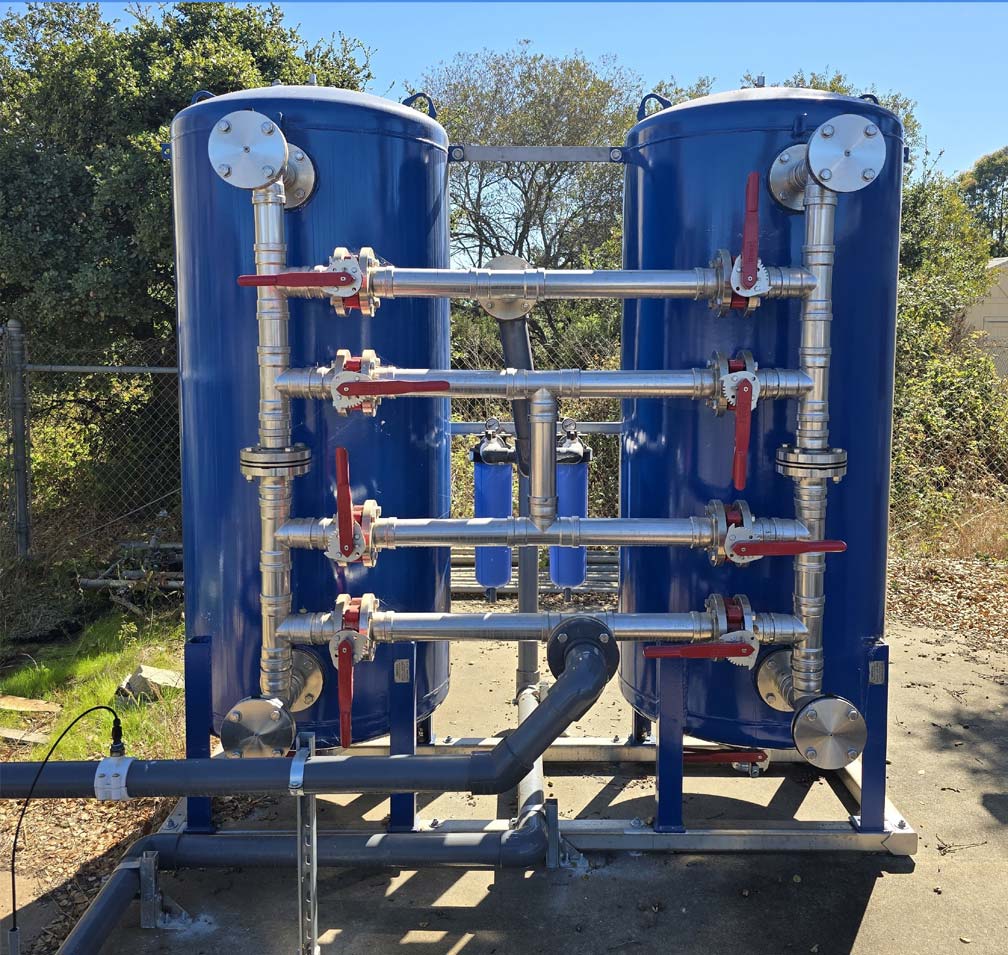
NSU conducted a comprehensive total lifecycle cost analysis comparing proven PFAS treatment technologies, including granular activated carbon (GAC), reverse osmosis (RO), and PFAS-specific ion exchange. Based on performance, operational complexity, and lifecycle cost, PFAS-specific ion exchange was selected as the optimal solution. NSU designed, permitted, and installed a lead-lag ion exchange treatment system engineered to reliably remove PFAS compounds while minimizing operational burden and long-term costs.
System Performance
- Consistent removal of PFAS to below detection limits
- Proven compliance with current California standards
- Scalable design to accommodate future regulatory changes
- Lower total lifecycle cost compared to GAC and RO alternatives
Highlights
- PFAS-specific ion exchange treatment
- Lead-lag vessel configuration
- Below-detection PFAS performance
- Lifecycle cost-optimized solution
- Designed, permitted, and installed by NSU
Achievements
Through early monitoring, proactive planning, and technology-driven decision making, NSU delivered a resilient PFAS treatment solution that protects public health while maintaining regulatory compliance and operational efficiency. The Buena Vista system now serves as a model for how small and midsized water systems can address PFAS challenges in a cost-effective and sustainable way.